
For years, Human Capital Management, or HCM, has helped employers bring important workforce functions together in one place. Payroll, HR, benefits, timekeeping, onboarding, talent management, and employee records can all live within a connected system rather than being managed through separate tools and manual processes.
That foundation is still essential; what is changing is the workforce itself. Artificial intelligence is no longer limited to helping employees draft an email or summarize a document. AI tools are beginning to take on more active roles inside businesses, including completing tasks, monitoring activity, identifying risks, and supporting decisions.
That shift is creating a new question for employers: How do you manage a workforce that may eventually include both people and AI agents?
isolved, our HCM technology partner, is introducing a new category called Workforce Capital Management, or WCM, to address that question.
What Is Human Capital Management (HCM)?
Human Capital Management refers to the systems and processes organizations use to manage their employees throughout the employment lifecycle.
A connected HCM platform may support areas such as:
- Recruiting and onboarding
- Payroll and tax administration
- Time and attendance
- Benefits enrollment
- HR records and compliance
- Performance and talent management
- Employee self-service
For small and mid-sized businesses, the value of HCM is often straightforward. It replaces disconnected systems, reduces duplicate work, improves access to information, and gives employers a more complete view of their workforce. Instead of managing payroll in one system, benefits in another, and employee records through spreadsheets or paper files, HCM brings those functions together.
What Is Workforce Capital Management (WCM)?
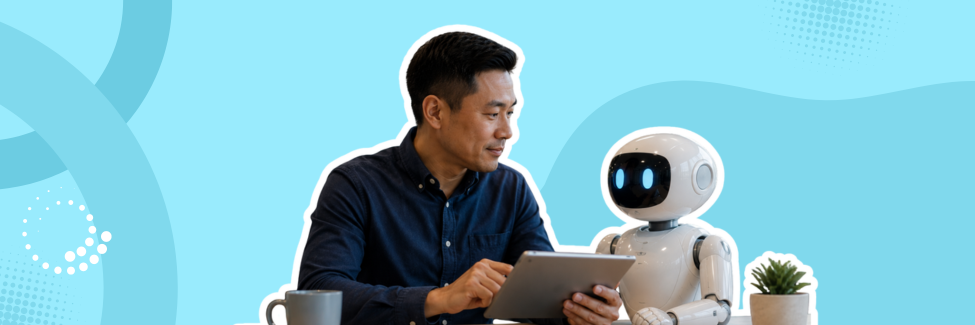
Workforce Capital Management builds on that HCM foundation. The difference is that WCM is designed for a workplace where human employees and AI agents may operate side by side.
An AI agent is more than a chatbot that answers a question or a tool that generates content. It can be assigned a specific responsibility, take action within approved boundaries, monitor an ongoing process, and escalate a matter to a person when human judgment is needed. Under isolved’s WCM model, these agents would be managed through the same type of structured oversight businesses already use for employees. That includes defined responsibilities, permissions, accountability, monitoring, and eventual offboarding.
In simple terms: HCM manages the employee lifecycle. WCM extends that structure to a blended workforce of people and AI agents.
This does not mean replacing the human side of HR. It means giving employers a way to introduce AI with clearer rules, visibility, and accountability.
Why Governance Matters
Many businesses are already experimenting with AI, sometimes without a formal process for managing it. An employee may use one tool to prepare communications, another to analyze information, and another to help complete administrative work. While these tools may save time, employers may not always have a clear view of what is being used, what information is being accessed, or who is responsible for reviewing the results.
That can create practical concerns:
- Who approves the work an AI agent performs?
- What information is it allowed to access?
- How are its actions reviewed?
- What happens when the system is uncertain?
- How can the organization document what occurred?
- When should a person step in?
WCM is intended to bring more structure to those questions. Rather than treating AI as software that operates in the background without clear ownership, the model treats each agent as part of the workforce. It has an assigned purpose, operates under established permissions, reports to an accountable human, and remains subject to review.
For employers, that structure may become increasingly important as AI begins interacting with sensitive areas such as payroll, benefits, employee records, and compliance.
From Assisting With Tasks to Owning Outcomes
Most workplace AI tools today are designed to make an individual task faster. They may draft a message, summarize a report, organize information, or help an employee find an answer.
The autonomous agents isolved has announced are intended to go further by taking responsibility for a defined outcome while keeping a person involved in the process.
The first six agents introduced by isolved are designed around common workforce challenges:
The Guardian
The Guardian monitors payroll activity and identifies potential problems before payroll closes. The goal is not simply to help someone review payroll more quickly, but to help prevent errors before employees are paid.
The Advisor
The Advisor supports employees during benefits enrollment by helping guide them through the process based on their individual needs. Its intended outcome is a more complete and accurate enrollment experience.
The Signal
The Signal looks for early indicators that a valued employee may be at risk of leaving, giving HR and leadership an opportunity to respond before a resignation occurs.
The Orchestrator
The Orchestrator coordinates onboarding tasks across connected systems so new employees are better prepared for their first day.
The Watchdog
The Watchdog monitors regulatory changes across the states where an employer operates and helps surface upcoming compliance requirements.
The Helper
The Helper responds to routine employee HR questions at any time, helping employees receive answers without every request becoming a manual HR ticket.
These capabilities are expected to be introduced in phases throughout 2026 and 2027. The isolved Connector for Claude is available now, allowing authorized users to connect their isolved account and ask questions or complete approved actions through natural-language conversations.
HCM Is Not Going Away
WCM should not be viewed as a replacement for HCM. A business cannot effectively manage AI-supported workforce processes without a reliable foundation underneath them. Accurate employee records, connected payroll and benefits information, defined policies, and clear workflows remain essential.
In many ways, the quality of an organization’s HCM foundation will influence how prepared it is to use more advanced technology responsibly. If payroll, HR, benefits, and employee data remain spread across disconnected systems, adding AI may create more complexity rather than less. A connected HCM platform gives employers a cleaner starting point by establishing one system of record and a more consistent set of processes.
That is why the shift from HCM to WCM is best understood as an evolution. HCM connects and manages the human workforce. WCM builds on that structure to manage a broader workforce that may include both employees and AI agents.
What Does This Mean for Small and Mid-Sized Employers?
It may be tempting to view autonomous AI agents as technology intended only for large companies. In reality, smaller and mid-sized employers may have some of the clearest use cases. These businesses often operate with lean HR, payroll, and administrative teams. One person may be responsible for several areas at once, leaving little time for proactive work.
Technology that can monitor payroll for possible errors, coordinate onboarding tasks, answer routine employee questions, or flag compliance developments could help relieve some of that administrative pressure. The goal should not be to remove people from the process. It should be to allow people to spend more time where their judgment, experience, and relationships matter most.
That may include:
- Supporting employees through complex situations
- Developing managers and future leaders
- Improving workplace communication
- Strengthening retention efforts
- Planning for growth
- Making informed workforce decisions
AI may help handle repetitive monitoring and routine activity. Human leaders remain responsible for setting expectations, reviewing outcomes, making judgment calls, and protecting the employee experience.
Questions Employers Should Begin Asking
Businesses do not need to adopt every new AI capability at once or develop a complete strategy overnight. A more practical approach is to start with a few simple questions focused on current needs, manageable opportunities, and appropriate oversight.
Consider asking:
- What repetitive tasks take the most time away from our team?
- Is there one process where better automation could reduce errors or follow-up work?
- Are employees already using AI tools, even informally, to complete their work?
- What information should always require added care or human review?
- Who should help evaluate and approve new AI tools as we explore them?
- Where could AI support our team without replacing personal service or human judgment?
- Do our current HR, payroll, and benefits systems give us a reliable foundation to build from?
Employers don't need to answer every question today, but starting with one or two can help identify practical next steps, create clearer expectations, and make future AI adoption feel more manageable.
The Human Role Becomes More Important, Not Less
As AI takes on more administrative work, strong leadership and human oversight become even more important. Someone still needs to define the outcome, set the rules, evaluate performance, recognize when context is missing, and step in when a situation requires empathy or judgment. That is especially true in HR, payroll, and benefits, where decisions can directly affect an employee’s pay, coverage, privacy, and experience at work.
WCM is not simply about what AI can do. It is about how employers can manage what AI does responsibly. The strongest model is likely to be one where technology and people work together, with AI supporting speed and consistency while humans provide accountability, context, and care.
Preparing for What Comes Next
The transition from HCM to WCM will not happen overnight. For many employers, the most practical first step is to strengthen the systems and processes they already have. That may mean connecting payroll and HR, reducing manual work, improving employee data, reviewing permissions, or establishing clearer internal policies for AI use. From there, businesses can evaluate new capabilities based on the problems they are trying to solve, not simply because the technology is available.
Here at Simco, we believe employers should not have to navigate that change alone. As an isolved Network Partner, we combine connected HCM technology with implementation guidance, responsive support, and practical expertise to help businesses use their systems effectively today while preparing for what comes next.
The workforce is evolving, and the opportunity is not to adopt AI as quickly as possible, but to introduce it thoughtfully, with the right foundation, appropriate oversight, and people still firmly at the center.
Sign up for our newsletter.